
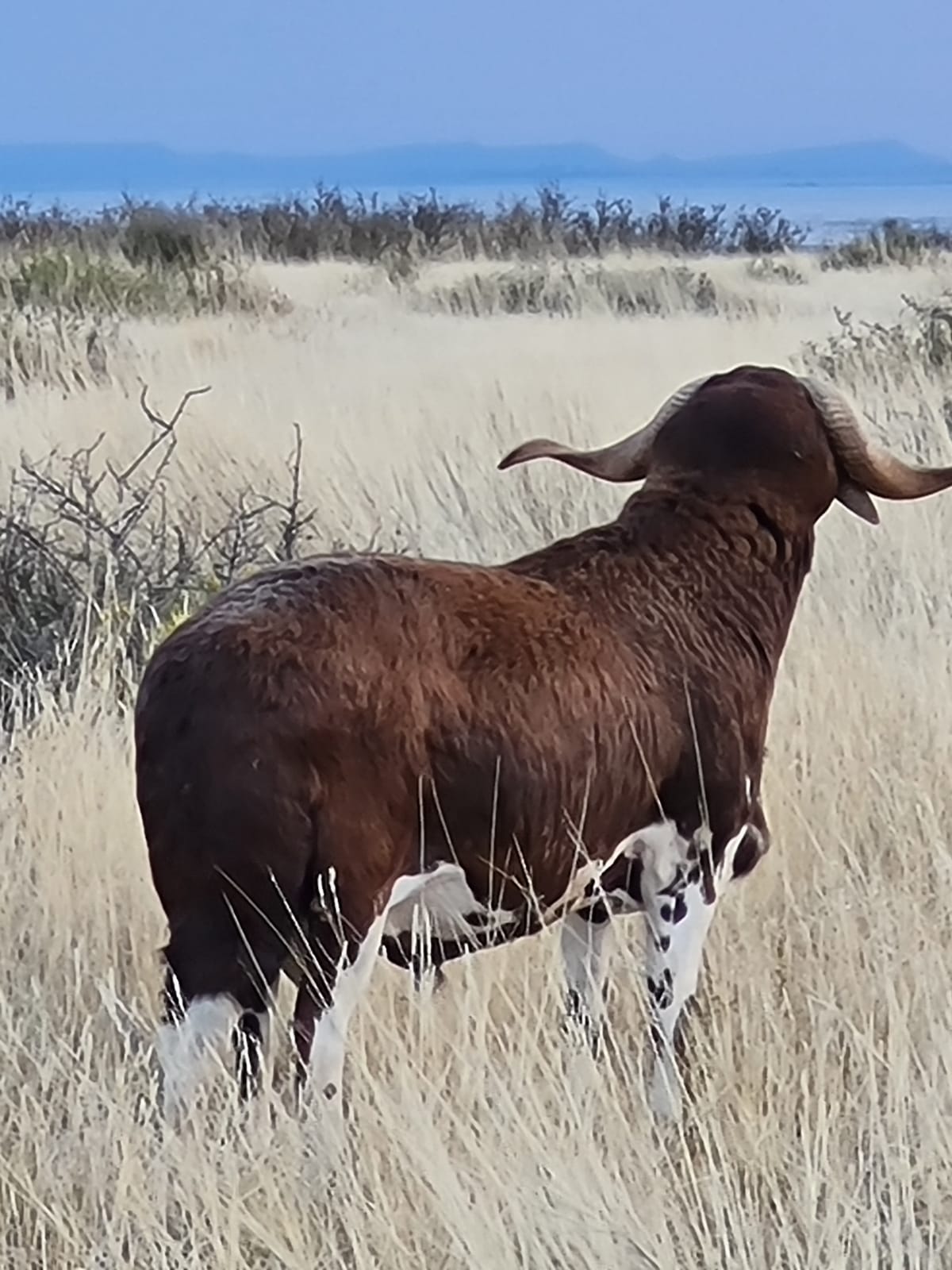
Some livestock breeds succeed because of intensive management. Others succeed because of their biology. The Damara sheep belongs firmly in the second category.
Developed through centuries of natural selection in harsh environments, the Damara has evolved traits that allow it to thrive where other breeds struggle.
1. Adaptation Through Natural Selection
Unlike many modern breeds developed under controlled conditions, the Damara evolved under natural pressures.
Heat, drought, predators, and limited grazing shaped the breed into a hardy and resilient animal capable of surviving under extensive farming systems.
This natural adaptation remains one of the Damara’s greatest advantages today.
2. Fat-Tail Energy Storage
One of the most recognisable features of the Damara is its fat-tail. Far from being cosmetic, this feature is a sophisticated survival mechanism.
The fat-tail stores energy reserves that can be mobilised during periods of limited nutrition.
This allows the animal to maintain:
- Body condition
- Reproductive performance
- Overall health
even when grazing becomes scarce.
3. Strong Immune System
Farmers often report that Damaras require fewer medical interventions compared to other breeds.
Their natural immune resilience means:
- Lower parasite sensitivity
- Reduced disease pressure
- Fewer veterinary costs
Healthy animals translate directly into improved profitability.
4. Efficient Reproduction
Reproductive efficiency is critical for any sheep enterprise. Damara ewes are known for their:
- Easy lambing
- Strong maternal instincts
- High lamb survival
These traits reduce labour requirements and improve overall flock productivity.
5. Built for Low-Input Farming
In a world where farming costs continue to rise, breeds that thrive under low-input systems are becoming increasingly valuable.
The Damara’s ability to perform well on natural veld makes it an ideal choice for sustainable farming systems.
Toughness isn’t just a trait — it’s the foundation of the Damara breed.