
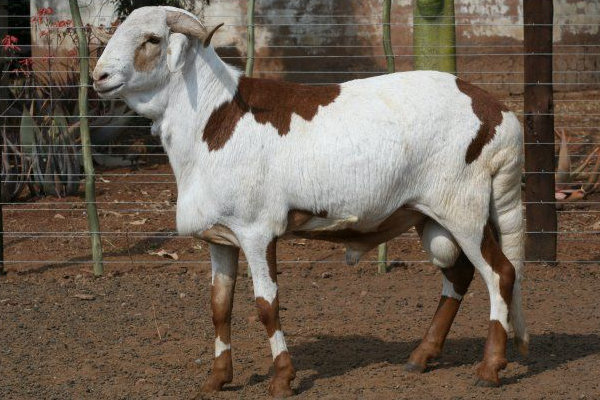
As summer fades and the transitional seasons begin, many breeds start showing strain — loss of condition, inconsistent weight gain, and rising management needs.
The Damara, shaped by centuries of natural selection, handles seasonal shifts with ease.
1. A Fat-Tail With Purpose
More than a visual characteristic, the Damara’s fat-tail is a biological masterpiece.
It acts as an energy reserve during:
- Harsh summers
- Late-season drought
- Poor grazing periods
This allows the sheep to maintain condition even when veld quality dips.
2. Heat Tolerance That Makes a Real Difference
When temperatures peak, stress in livestock leads to weight loss, health issues, and production drops.
The Damara’s heat tolerance ensures:
- Lower stress
- Better feed conversion
- Stable reproduction cycles
This reliability makes them ideal for Southern African conditions.
3. Health Resilience = Fewer Interventions
The Damara is well-known for its natural parasite resistance and strong immune system.
This translates into:
- Fewer vet visits
- Lower parasite treatments
- Reduced downtime for the flock
Healthy animals are productive animals — and Damaras stay healthy with minimal interference.
4. Adapted for Extensive Farming
Not every farm has access to irrigated pastures or high-input feeding systems.
The Damara thrives in extensive veld conditions where other breeds struggle.
They walk well, forage widely, and utilise shrubs and grasses efficiently.
5. A Breed for Farmers Planning Ahead
Climate unpredictability is the new normal.
Choosing a breed that performs well across seasons is no longer a luxury — it’s a necessity.
The Damara stands strong through heat, drought, veld changes, and seasonal stress.
It’s resilience you can bank on — year after year.