
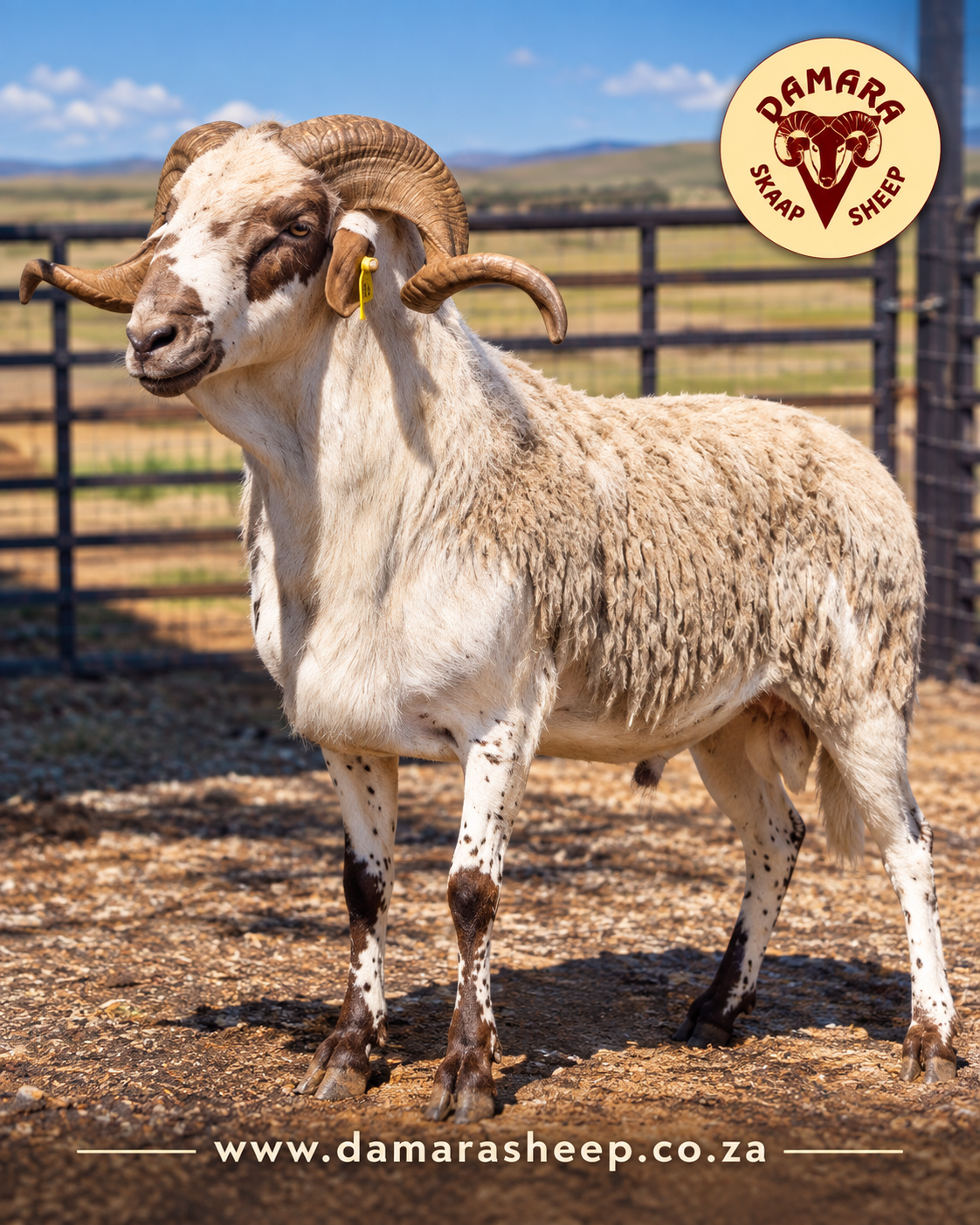
Spring brings warmer days, longer hours of sunlight and fresh growth across the veld. It also brings a visible seasonal change to the Damara sheep: the transition from its winter coat to its lighter summer covering.
Unlike wool breeds that depend on regular shearing, the Damara has a predominantly short-haired coat and naturally sheds the additional woolly covering it may develop during colder conditions. This is one of the breed’s practical adaptations to changing Southern African seasons.
1. A Coat That Changes With the Climate
In colder areas, Damaras can develop a longer coat with a woolly undercoat during winter. As temperatures rise, that additional covering is naturally shed, leaving the shorter hair coat better suited to warmer weather.
This seasonal adjustment means the animal’s coat works with its environment rather than requiring the same management associated with conventional wool production.
2. Less Dependence on Shearing
For many sheep enterprises, shearing requires labour, planning, equipment and additional handling.
Damara sheep offer a different system.
Because they naturally shed their seasonal covering, they can be incorporated into farming operations without the regular shearing requirements associated with wool breeds. The Damara Sheep Breeders’ Society of Australia specifically identifies the lack of shearing as one of the factors contributing to lower management requirements.
For extensive farmers, fewer routine interventions can translate into simpler flock management.
3. Spring Is a Good Time to Observe Coat Development
The shedding period also gives breeders an opportunity to observe individual animals.
A Damara’s coat can vary in texture, and the breed occurs in black, brown, white and combinations of these colours. Young animals may retain a different “baby coat” before developing their adult covering.
Rather than looking only at colour, breeders should consider the complete animal and how its characteristics align with their breeding objectives.
4. Less Handling Supports Extensive Systems
Every additional management procedure requires animals to be gathered and handled.
A naturally shedding breed reduces one of those recurring jobs.
That characteristic complements the Damara’s suitability for extensive production systems, where practical efficiency can be just as important as animal performance.
5. Designed for Changing Seasons
Spring reveals something important about the Damara: adaptation isn’t only about surviving difficult conditions.
It is also about responding efficiently when those conditions change.
From a protective winter covering to a lighter summer coat, the Damara demonstrates how generations of adaptation have produced a sheep suited to Southern Africa’s changing seasons.
When spring arrives, the Damara doesn’t need a wardrobe change from the farmer — nature has already taken care of it.